
Why Secure Tech Disposal Is Essential for Modern Businesses
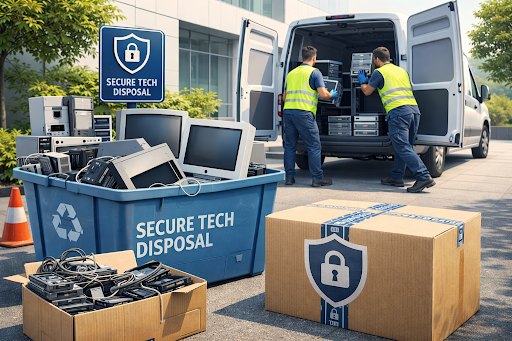
Digital infrastructure plays a central role in business operations, from data storage and communication to automation and analytics. As organizations upgrade systems and replace outdated equipment, the secure handling of retired devices becomes a critical responsibility.
Improper disposal can expose sensitive information, create compliance risks, and harm the environment.
Partnering with a certified e-waste recycling company in Dubai enables businesses to manage obsolete technology safely while maintaining security, sustainability, and regulatory confidence.
1. Protecting Business-Critical Data Beyond Device Lifecycles
Retired computers, servers, and storage devices often retain confidential information long after daily use ends. Secure disposal ensures that data does not become vulnerable during or after decommissioning.
- Eliminating residual data risks
Hard drives and memory units may store recoverable data even after deletion. Secure disposal processes permanently erase or physically destroy data-bearing components, preventing unauthorized access and misuse. - Safeguarding intellectual property
Business strategies, financial records, and proprietary information require strict protection. Secure tech disposal prevents sensitive assets from being exposed through resale or informal recycling channels. - Maintaining client and partner trust
Organizations that handle data responsibly demonstrate accountability. Secure disposal reinforces trust among customers, stakeholders, and partners who rely on strong data protection practices.
2. Strengthening Compliance With Regulatory and Industry Standards
Modern businesses operate under strict data protection, environmental, and corporate governance regulations. Secure tech disposal supports compliance across multiple regulatory frameworks.
- Meeting data protection requirements
Laws governing data privacy require organizations to manage information securely, even during disposal. Certified destruction methods help businesses meet legal obligations with documented proof. - Aligning with environmental regulations
Electronics contain hazardous materials that require controlled processing. Secure disposal ensures compliance with environmental standards set by local authorities and international guidelines. - Reducing audit and legal exposure
Verified disposal records provide traceability. This documentation supports audits and minimizes legal risks associated with improper disposal practices.
3. Reducing Environmental Impact Through Responsible Disposal
Discarded electronics contribute significantly to environmental pollution when handled improperly. Secure disposal integrates environmental responsibility into business operations.
- Preventing hazardous material leakage
Components such as lead, mercury, and lithium can contaminate soil and water. Secure disposal channels ensure these substances are treated and processed safely. - Supporting sustainable resource recovery
Responsible disposal allows valuable materials like copper and aluminium to be recovered without environmental harm. This reduces reliance on raw material extraction. - Promoting cleaner operational ecosystems
Businesses that adopt secure disposal reduce their environmental footprint and contribute to healthier surroundings for communities and industries alike.
4. Minimizing Operational and Reputational Risks
Improper handling of retired technology exposes businesses to reputational damage and operational disruption. Secure disposal mitigates these risks effectively.
- Avoiding data breach incidents
Data leaks originating from discarded devices can cause financial loss and reputational harm. Secure disposal eliminates this vulnerability at the source. - Protecting brand credibility
Environmental negligence or data mishandling can damage brand perception. Responsible disposal reinforces a company’s commitment to ethical operations. - Ensuring continuity in IT transitions
Structured disposal supports smooth technology upgrades without leaving legacy risks behind. This improves efficiency during system transitions.
5. Supporting Corporate Sustainability and ESG Goals
Environmental, Social, and Governance (ESG) commitments are increasingly important to investors, partners, and customers. Secure tech disposal directly contributes to these objectives.
- Enhancing environmental accountability
Responsible disposal demonstrates measurable action toward sustainability goals. This strengthens environmental performance indicators within ESG reporting. - Demonstrating social responsibility
Secure disposal prevents unsafe, informal recycling practices that endanger workers. Ethical handling reflects a broader commitment to social well-being. - Strengthening governance frameworks
Clear disposal policies and documentation improve internal governance and reinforce transparency in asset management.
6. Improving Asset Management and Inventory Control
Secure disposal supports better visibility and control over IT assets throughout their lifecycle.
- Streamlining decommissioning processes
Defined disposal workflows ensure that devices are retired systematically. This reduces confusion, delays, and unmanaged equipment accumulation. - Accurate tracking of retired assets
Secure disposal includes proper documentation, helping businesses maintain accurate asset records and avoid discrepancies. - Optimizing storage and operational space
Removing obsolete equipment frees up valuable space, improving workplace organization and efficiency.
7. Enhancing Employee Awareness and Internal Security Culture
Secure tech disposal influences organizational culture by reinforcing security and responsibility at all levels.
- Encouraging responsible device handling
Employees become more mindful of data security when disposal protocols are clearly defined and enforced. - Reducing internal security gaps
Clear guidelines prevent unauthorized disposal or resale of equipment, reducing internal vulnerabilities. - Building long-term security habits
Consistent disposal practices create a culture where data protection extends beyond daily operations into asset retirement.
8. Leveraging Professional Expertise for Reliable Outcomes
Secure disposal requires technical expertise, certified processes, and specialized infrastructure. Professional services ensure consistency and reliability.
- Access to advanced destruction technologies
Professional recyclers use industrial-grade tools for data destruction and material separation, ensuring high security standards. - End-to-end process accountability
From collection to final disposal, every step is monitored and documented, reducing uncertainty and risk. - Scalable solutions for growing businesses
Professional services adapt to different volumes and asset types, supporting businesses of all sizes.
Conclusion
Secure tech disposal is no longer an operational afterthought; it is a strategic responsibility that directly affects business security, regulatory standing, and environmental impact. As organizations continue to upgrade their digital infrastructure, the risks associated with unmanaged or informal disposal practices grow significantly.
Data exposure, regulatory penalties, and environmental harm are all preventable when secure disposal is integrated into the technology lifecycle. Businesses that prioritize structured and certified disposal processes demonstrate foresight, accountability, and a strong commitment to responsible growth.
Partnering with a trusted service provider ensures that obsolete devices are handled with precision, transparency, and care. Planet Green Recycling (L.L.C.) plays a vital role in supporting modern enterprises through secure, compliant, and environmentally responsible tech disposal solutions. With certified processes, advanced handling methods, and a focus on sustainable outcomes, the company enables organizations to retire technology assets safely while reinforcing data protection, regulatory compliance, and long-term sustainability goals. By choosing secure disposal practices, businesses actively contribute to safer digital ecosystems and a cleaner future driven by responsible innovation.